What happens when one meets or talks to one's mother after a long, a really long gap?
The warmth, comfort and the familiarity of the relationship is there, but it isn't easy to explain the neglect on one's part.
At the start of the year, when I was finalizing my reading goals, I had also decided that I will read at least one book in Punjabi (my mother tongue) this year. And it is a sheer coincidence that my mother gifted me two Punjabi books, few months back. While reading the Punjabi book, it felt like my vocabulary has shrunk. I hadn't read in Punjabi since school. So it took some time getting used to reading a book in the language of my childhood dreams.
Before I share my views on Raseedi Ticket (The Revenue Stamp) by Amrita Pritam, here is an interesting anecdote about the title of the book, which I had read online, much before I got the book in my hands.
"Khushwant Singh (an eminent Indian author) once told Amrita Pritam that the story of her life was so inconsequential and tiny that it could be written at the back of a revenue stamp. Keeping this joke in mind, Amrita Pritam penned her autobiography and titled it 'Raseedi Ticket', or The Revenue Stamp."

Amrita Pritam is an intense writer, whose writing is seeped in the world history, tragedy, unrequited love and deep philosophy. So expecting a conventional autobiography from her is foolish. Yes! She gives the reader some key details of her life and some milestones etched in the years which she truly lived. But it is her work and craft; her muses and inspirations; her dreams and concerns that she talks about in extraordinary detail. She also shares several extracts of her work and reproduce several poems & short stories, in the book which helped me as a reader to understand her state of mind at different stages of her life. Her world-view will tug at your heart.
A very small anecdote, very early in the book, about religious segregation at her childhood home (separate utensils for people from a particular community) and her love affair with some one from that community when she grew up, sets the tone for this autobiography. Irony is one of the dominant themes in her life it seems.
Another place in the book, where she narrates her visit to Sahir Ludhianvi's (an Indian poet) home in Mumbai, in the form of a short story about the roads that never meet, I found her depth as an author really amazing.
She has also included her travel diaries from places across the world. These stories are interesting not because of the countries she visited, but because of her ability to connect with like minded people there through her work. Also interesting in these travel diaries is her deep understanding of the history of those places and how she is able to link that with the present situations. As one reaches the end of the book, she also talks about her Rajya Sabha (upper house in Indian Parliament) stint, but largely about the questions she asked on the floor of the house. It seems that as a person she was highly organized as she had documented almost every aspect of her life.
There is a section where she briefly touches upon her relationship with Imroz (artist & writer; Amrita's partner) and his personality. In this section also, she avoids conventional and mundane details. She compares Imroz to a saint in folklore and talks about his malleability and his unflinching devotion towards her.
There is another section in the book which talks about 'documentation of history'. This section is based on her time and work with Osho. An interesting perspective emerges. Western civilization was better in documenting history because Indians considered 'History' a useless fact. Our documents or Puranas focused on the 'True Meaning'. The book ends with her last poem - Main Tenu Pher Milangi (I will meet you again). You might have heard it in the film Manmarziyan (The Heart's Wish). The poem captures her pathos and the essence of her free spirit. And I think that is the essence of her life and this book too.
There is a section where she briefly touches upon her relationship with Imroz (artist & writer; Amrita's partner) and his personality. In this section also, she avoids conventional and mundane details. She compares Imroz to a saint in folklore and talks about his malleability and his unflinching devotion towards her.
There is another section in the book which talks about 'documentation of history'. This section is based on her time and work with Osho. An interesting perspective emerges. Western civilization was better in documenting history because Indians considered 'History' a useless fact. Our documents or Puranas focused on the 'True Meaning'. The book ends with her last poem - Main Tenu Pher Milangi (I will meet you again). You might have heard it in the film Manmarziyan (The Heart's Wish). The poem captures her pathos and the essence of her free spirit. And I think that is the essence of her life and this book too.
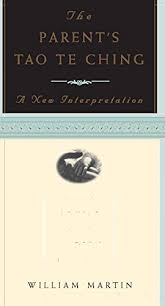
The Parent's Tao Te Ching ~A New Interpretation ~ Ancient Advice for Modern Parents by William Martin is a book I re-read this year. As I became a first time parent few years back, someone recommended this book to me. It is a fresh interpretation of Tao Te Ching / Tao seen through the prism of parenting. The book is easy to read (with simple, micro-sized chapters, that are written in free verse) but demands reader's time to reflect on each and every line one reads. There are just 140 pages, across 81 chapters that talk about parenting. But I must warn you, it is not an assured guide towards parenting. It is not a self-help book. It doesn't provide you tips or cheat codes. It is not a book which you read once and then it goes on to your bookshelf.
The book is about the way of life, the way of parenting. It talks about the philosophy, which should guide the way we live or the way we approach parenting or do anything else in our lives. It is a book which I will go back to every time I have doubts. Every time one reads it , one is bound to reflect on one's actions and may be discover something new. My words will never be good enough to capture the essence of this book and hence I am reproducing a quote from the book below. May be it will encourage you to read this one.
“Believe this difficult truth. Showing respect in the face of disrespect, love in the face of hate, trust in the face of betrayal, and serenity in the face of turmoil, will teach your children more than all the moral lectures by all the preachers since the dawn of time.”
The book is about the way of life, the way of parenting. It talks about the philosophy, which should guide the way we live or the way we approach parenting or do anything else in our lives. It is a book which I will go back to every time I have doubts. Every time one reads it , one is bound to reflect on one's actions and may be discover something new. My words will never be good enough to capture the essence of this book and hence I am reproducing a quote from the book below. May be it will encourage you to read this one.
“Believe this difficult truth. Showing respect in the face of disrespect, love in the face of hate, trust in the face of betrayal, and serenity in the face of turmoil, will teach your children more than all the moral lectures by all the preachers since the dawn of time.”


